* Most meteors are small: They are usually just tiny particles of rock and dust. They burn up in the atmosphere before they can reach the ground, and thus don't pose any radiation risk.
* Some meteors are larger: These can survive their fiery descent and impact the Earth. The risk of radiation depends on the meteor's composition:
* Iron meteorites: These can contain small amounts of naturally occurring radioactive isotopes, but the levels are typically very low and not harmful.
* Stony meteorites: They are usually not radioactive, although rare ones containing uranium or thorium might have a slight level.
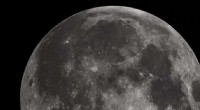
* Some rare meteors: A very small number of meteorites are actually fragments of other planets or moons, which might have higher levels of radioactive elements.
Important to note: The vast majority of meteors do not pose a radiation risk. However, if you find a suspected meteorite, it's best to have it examined by a professional to determine its composition and any potential hazards.
Here are some additional points to consider:
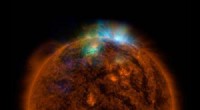
* Radiation from the Sun: While the Sun emits radiation, this is primarily light and heat. It's not the same type of radiation as what's found in nuclear materials.
* Radiation from space: There's a natural background radiation level in space, but this is usually very low and not harmful.
So, while a meteorite might have *some* radiation, the risk is minimal and mostly theoretical for the average person.