Here's why:
* Gravity: The Sun's immense mass creates a powerful gravitational pull that holds everything in the solar system in its orbit. It's the dominant force in our solar system, making it the central object.
* Nuclear Fusion: The Sun generates energy through nuclear fusion, converting hydrogen into helium, releasing massive amounts of energy in the process. This energy is what makes the Sun shine and provides the heat and light that sustains life on Earth.
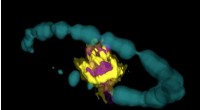
* Formation: The Sun formed from a giant cloud of gas and dust, which collapsed under its own gravity. Most of the material in this cloud coalesced into the Sun, leaving behind a relatively small amount of material to form the planets and other objects in our solar system.
So, while it's true that the Sun accounts for the vast majority of the mass in our solar system, it's important to acknowledge that the remaining 0.14% still accounts for a significant amount of material, including the planets, moons, asteroids, and comets.