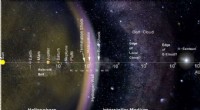
* The Building Blocks: Interstellar clouds are vast, cold, and diffuse regions of space primarily composed of hydrogen and helium, along with traces of heavier elements. These elements are the raw ingredients for stars and planets.
* Gravitational Collapse: Over time, the gravitational pull of these clouds can cause them to collapse in on themselves. As the cloud collapses, it heats up, and denser regions within the cloud become even denser, eventually forming a protostar at the core.
* Planetary Formation: Around this protostar, a swirling disk of gas and dust forms, known as a protoplanetary disk. Within this disk, material begins to clump together, eventually forming planetesimals, which then coalesce into planets.
* Our Solar System's Origin: Scientists believe our own solar system formed about 4.6 billion years ago from a collapsing interstellar cloud. The Sun formed at the center, and the planets, including Earth, formed from the remaining material in the protoplanetary disk.
* Ongoing Connection: Interstellar clouds continue to play a role in our solar system. For example, comets and meteoroids are believed to have originated from the outer regions of the solar system, where they were formed from the original interstellar cloud material. These objects can bring important materials, like water, to Earth.
In summary: Interstellar clouds are the "parent" structures that give rise to star systems, including our own. They provide the raw materials and the initial conditions necessary for the formation of planets and everything else we see within the solar system.