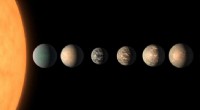
* Stars are incredibly spread out: The distances between stars are vast, measured in light-years (the distance light travels in one year).
* There's no single answer: The distances between stars vary greatly.
* Our perspective matters: Stars appear closer together in the sky than they actually are because of our limited perspective from Earth.
Here's a general idea of the distances:
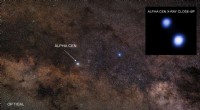
* Nearest star: Proxima Centauri, the closest star to our Sun, is about 4.24 light-years away.
* Stars in our galaxy: Within the Milky Way galaxy, stars are typically separated by a few light-years.
* Stars in other galaxies: Stars in other galaxies are much, much farther away, often millions or billions of light-years.
To put these distances into perspective:
* If you were to shrink the Milky Way galaxy to the size of a dinner plate, the stars would be like grains of sand scattered across it.
* Imagine a grain of sand representing the Sun. The nearest star, Proxima Centauri, would be another grain of sand about 4 feet away.
How astronomers measure distances:
Astronomers use various techniques to measure distances to stars, including:
* Parallax: This technique uses the apparent shift in a star's position when viewed from different points in Earth's orbit around the Sun.
* Standard candles: These are objects with known brightness, like certain types of stars or supernovae, which can be used to calculate distances based on their apparent brightness.
Let me know if you'd like to explore any of these topics in more detail!