Here's a breakdown:
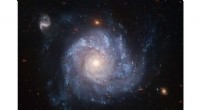
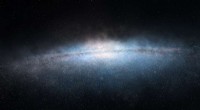
1. More Galaxies: Beyond the Milky Way, there are countless other galaxies.
* Local Group: Our galaxy is part of a small cluster called the Local Group, which includes about 50 galaxies, including our nearest neighbor, Andromeda.
* Beyond the Local Group: The Local Group is just one tiny piece of the much larger Virgo Supercluster, which contains thousands of galaxies. And superclusters are grouped into even larger structures!
2. The Intergalactic Medium: The space between galaxies isn't empty. It's filled with a thin, hot gas called the intergalactic medium. This gas is mostly hydrogen and helium, and it's responsible for some of the faint light we can detect from between galaxies.
3. Dark Matter and Dark Energy: We can't see these directly, but we know they exist based on their gravitational effects. Dark matter makes up the majority of the universe's mass, and dark energy is driving the accelerated expansion of the universe.
4. The Cosmic Microwave Background Radiation: This faint radiation is a leftover "glow" from the Big Bang, the event that created the universe. It's spread uniformly across the universe and is a powerful tool for studying the early universe.
5. Unknown Mysteries: While we've learned a lot about the universe, there are still many mysteries, such as:
* What exactly is dark matter and dark energy?
* Are there other universes beyond our own?
* What is the ultimate fate of the universe?
In summary: Beyond the Milky Way, there is a universe filled with galaxies, clusters of galaxies, and a vast network of interconnected structures. The journey into what lies beyond our own galaxy is a journey of discovery, and scientists are constantly uncovering new knowledge about the universe we live in.