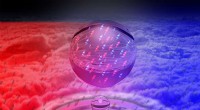
1. A giant cloud of gas and dust (nebula) collapses under its own gravity.
* This cloud is mostly made up of hydrogen and helium, with some heavier elements.
* The collapse causes the cloud to spin faster and flatten into a disk shape.
2. The center of the disk becomes denser and hotter, eventually forming the Sun.
* The Sun's intense gravity continues to pull in material from the surrounding disk.
3. The remaining material in the disk clumps together, forming planetesimals.
* Planetesimals are small, rocky bodies that collide and accrete to form larger objects.
* The inner planets (Mercury, Venus, Earth, and Mars) are primarily composed of rock and metal, because the heat from the Sun drove away lighter elements.
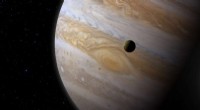
4. Further out in the disk, where it is colder, ices and gases also condense, forming the gas giants (Jupiter, Saturn, Uranus, and Neptune).
* These planets are much larger than the inner planets and have a thick atmosphere of hydrogen, helium, and methane.
5. Over time, the planets sweep up most of the remaining debris in the disk.
* This process leaves behind a few smaller bodies like asteroids and comets.
The nebular hypothesis is supported by many observations, including:
* The nearly circular orbits of the planets around the Sun.
* The presence of a disk of gas and dust around other young stars.
* The composition of planets and other bodies in our solar system.
It's important to note that the nebular hypothesis is constantly being refined as new discoveries are made, but it remains the most widely accepted theory for the formation of our solar system.