1. Kepler's Third Law and Orbital Motion:
* For planets and stars in binary systems: This method uses Kepler's Third Law, which relates the orbital period (time it takes for an object to complete one orbit) and the average distance between two orbiting objects to their combined mass. By observing the orbital period and distance of a binary star system, astronomers can calculate the total mass of the system.
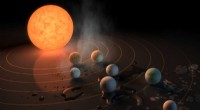
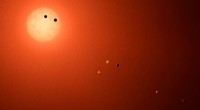
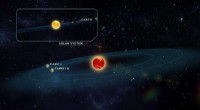
* For planets orbiting stars: If we know the orbital period and radius of a planet orbiting a star, we can use Kepler's Third Law to calculate the star's mass.
2. Gravitational Lensing:
* For distant galaxies and clusters: Massive objects bend the path of light passing near them, a phenomenon called gravitational lensing. By analyzing the distortion and magnification of distant galaxies or stars as their light bends around a massive foreground object, astronomers can estimate the mass of the lensing object.
3. Stellar Evolution Models:
* For stars: Stellar evolution models predict how stars change over time based on their mass, luminosity, and composition. By comparing observations of stars with theoretical models, astronomers can estimate the masses of stars.
4. Dynamics of Galaxies:
* For galaxies: Astronomers can study the rotation curves of galaxies (how fast stars rotate at different distances from the galactic center) to infer the distribution of mass within the galaxy. This often reveals the presence of "dark matter," which is a form of matter that doesn't interact with light and whose mass can be estimated from its gravitational influence.
5. Doppler Shift and Radial Velocity:
* For stars: This method, especially useful for exoplanet detection, uses the Doppler shift of starlight caused by the gravitational pull of an orbiting planet. By observing the tiny wobble of a star's radial velocity, astronomers can calculate the mass of the orbiting planet.
6. Surface Brightness Fluctuations:
* For galaxies: This technique measures the variations in the surface brightness of a galaxy to estimate its mass. By analyzing the size and brightness of the fluctuations, astronomers can determine the galaxy's total mass.
7. Using Supernovae:
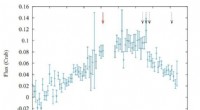
* For stars: Observing the light curve of a supernova (the brightness versus time) can help estimate the mass of the star that exploded. This method works because the brightness and duration of a supernova are related to the mass of the progenitor star.
It's important to note:
* Each method has its limitations and accuracy depends on various factors like observation precision, assumptions about the object's composition, and the complexity of the analysis.
* The above methods often provide estimates rather than precise values.
* Astronomers often use multiple methods to cross-check and refine their mass estimates.
These are just some of the ways astronomers calculate the mass of celestial objects. The field of astronomy is constantly evolving, and new methods are being developed as our understanding of the universe grows.