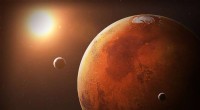
1. Gravity: This is the primary force. Every object with mass exerts a gravitational pull on every other object with mass. The Sun, being the most massive object in our solar system, exerts a strong gravitational pull on the planets, keeping them in orbit around it.
2. Inertia: This is the tendency of an object to resist changes in its motion. Planets are already moving at a high speed, and their inertia wants to keep them moving in a straight line. However, gravity pulls them towards the Sun, constantly changing their direction and causing them to follow a curved path - an orbit.
3. Orbital Velocity: Planets are traveling at just the right speed to maintain their orbit. If a planet was moving too slowly, gravity would pull it in closer to the Sun. If it was moving too fast, it would escape the Sun's gravitational pull and fly off into space.
Imagine a ball on a string:
* Gravity: The string represents the force of gravity pulling the ball towards the center.
* Inertia: The ball's motion wants to keep it moving in a straight line.
* Orbital Velocity: The speed at which the ball is moving keeps it from falling into the center.
In summary: It's the combination of gravity and inertia that keeps planets in their orbits. Gravity pulls them towards the Sun, while their inertia keeps them moving forward, resulting in a constant curved path around the Sun.