1. Formation and Structure:
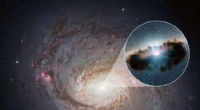
* Initial Collapse: Galaxies form from vast clouds of gas and dust. Gravity acts as the primary force drawing these materials together. As the cloud collapses, it heats up and spins, eventually forming a rotating disk.
* Star Formation: Gravity continues to play a key role within the galaxy's disk. Dense regions of gas and dust collapse under their own gravity, forming stars.
* Spiral Arms: The spiral arms of spiral galaxies are formed by density waves, which are essentially ripples of gravitational influence traveling through the galactic disk. These waves compress gas and dust, triggering bursts of star formation.
* Elliptical Galaxies: Elliptical galaxies are thought to form from the mergers of smaller galaxies, a process driven by gravity. The merging process often leads to a more spheroidal shape and a lack of spiral structure.
2. Dynamics and Motion:
* Orbital Motion: Gravity holds stars and gas clouds in orbits around the galactic center. The speed and shape of these orbits depend on the distribution of mass within the galaxy.
* Galactic Rotation: Galaxies rotate, with stars and gas moving in a circular or elliptical motion. This rotation is also driven by gravity, and the speed of rotation varies with distance from the galactic center.
* Dark Matter: While we can't directly see it, dark matter exerts a significant gravitational pull on the visible matter in galaxies. This gravitational influence is responsible for the observed rotation curves of galaxies, where stars at the outer edges move much faster than expected based on the visible matter alone.
3. Interactions and Evolution:
* Galactic Collisions and Mergers: Gravity is the driving force behind interactions between galaxies. When galaxies collide, their stars and gas clouds interact, sometimes triggering bursts of star formation or even leading to the formation of new galaxies.
* Tidal Forces: The gravitational pull of one galaxy can affect the shape and distribution of stars in another galaxy, creating tidal tails or other distortions.
* Galactic Evolution: Over billions of years, the gravitational interaction between galaxies and the distribution of dark matter can influence their shape, size, and composition.
In summary: Gravity is the fundamental force that governs the formation, structure, dynamics, and evolution of galaxies. It pulls matter together, regulates its motion, and shapes the interactions between galaxies. Without gravity, galaxies as we know them wouldn't exist.