Revolution:
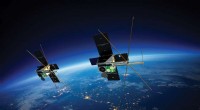
* Definition: Revolution refers to the movement of one celestial body around another in a complete circle or ellipse. Think of the Earth revolving around the Sun.
* Key Aspect: Revolution defines the *path* and *time* taken for one complete cycle. This determines the length of a year on a planet.
Orbit:
* Definition: Orbit is a broader concept that describes the *path* an object takes around another object due to gravitational attraction.
* Key Aspect: While revolution is a specific type of orbit, orbit itself can be more complex. It can include:
* Elliptical orbits: Like the Earth's orbit, most planets follow elliptical paths, not perfect circles.
* Irregular orbits: Some objects, like comets, have highly irregular, elongated orbits that are not elliptical.
Impact on Understanding Celestial Bodies:
* Predicting Positions: Understanding revolutions and orbits allows us to predict the future positions of celestial bodies. This is crucial for:
* Navigation: Understanding the Earth's orbit around the Sun helps us determine the seasons and plan voyages.
* Astronomy: Astronomers rely on orbital calculations to predict when celestial events like eclipses will occur.
* Understanding Gravity: The concept of revolution and orbit are direct consequences of gravity. The gravitational pull of one body on another dictates the shape and speed of the orbit. Studying these motions helps us understand the fundamental forces governing the universe.
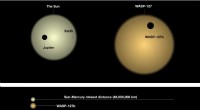
* Discovering New Bodies: Observing the orbit of one object around another can reveal the presence of a previously unseen body. For example, the wobble in a star's orbit can indicate the presence of an exoplanet.
In Summary:
Revolution is a specific type of orbit that describes the movement of one celestial body around another in a complete cycle. Orbit is a broader term that encompasses various paths and motions under gravitational influence. Both concepts are vital for understanding the dynamics of the universe and for predicting and interpreting celestial events.