Composition:
* Primarily composed of gas: They are mostly made up of hydrogen and helium, with smaller amounts of other gases like methane and ammonia.
* Lack of solid surface: Unlike the inner rocky planets, they don't have a solid surface. The gas gradually becomes denser and hotter towards the core, but there isn't a distinct boundary like Earth's crust.
Physical Characteristics:
* Large size and mass: They are significantly larger and more massive than the inner planets.
* Strong gravitational pull: Due to their large size and mass, they have a strong gravitational pull.
* Many moons: They all possess a large number of moons, some even exceeding a dozen.
* Ring systems: All outer planets have ring systems, though Saturn's rings are the most prominent.
Atmosphere:
* Thick and dynamic atmospheres: They have thick atmospheres with complex weather patterns, strong winds, and powerful storms.
* Distinct colors: Each planet has a unique color due to different atmospheric compositions and cloud formations.
Other Similarities:
* Farther from the Sun: They are located much further from the Sun than the inner planets.
* Cold temperatures: Their distance from the Sun results in extremely cold temperatures.
* Less dense: Compared to the inner planets, they have much lower densities.
* Forming early in the solar system: They are believed to have formed early in the solar system's history.
Specific differences:
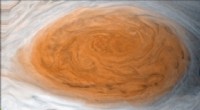
While the outer planets share many similarities, they also have distinct differences, primarily related to their size, composition, and atmospheric characteristics. For example, Jupiter is the largest gas giant and has a more prominent Great Red Spot, while Uranus is tilted on its side and Neptune has strong winds and a blue color.
In summary, the outer planets are alike in their composition, physical characteristics, and general atmospheric properties. However, they also have distinct differences that make each planet unique.