Planets with Magnetic Fields:
* Earth: Earth has a strong, dipolar magnetic field generated by the movement of molten iron in its core. This field protects us from harmful solar radiation.
* Mercury: Despite its small size, Mercury has a weak magnetic field, about 1% of Earth's.
* Jupiter: Jupiter has the strongest magnetic field in the solar system, about 20,000 times stronger than Earth's. It's generated by the rapid rotation of its metallic hydrogen core.
* Saturn: Saturn has a magnetic field about 1/20th the strength of Jupiter's.
* Uranus: Uranus has a tilted and oddly shaped magnetic field that is not aligned with its axis of rotation. This might be due to its unusual axial tilt.
* Neptune: Neptune has a magnetic field that is tilted and offset from its center, similar to Uranus.
Planets without Significant Magnetic Fields:
* Venus: Venus has a very weak magnetic field, almost negligible.
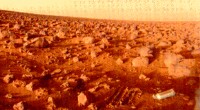
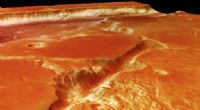
* Mars: Mars has a very weak, localized magnetic field, thought to be remnants of a stronger field in the past.
Key takeaways:
* Magnetic fields are generated by the movement of electrically conductive materials within a planet.
* Planets with large, fast-spinning cores tend to have stronger magnetic fields.
* The strength and shape of a magnetic field can vary greatly even within the same planetary system.