Here's why:
* Mercury: Mercury has a very thin exosphere, which is essentially a trace amount of atoms and molecules that barely qualify as an atmosphere.
* Venus: Venus has a very thick atmosphere, mostly composed of carbon dioxide. This atmosphere traps heat, resulting in a runaway greenhouse effect.
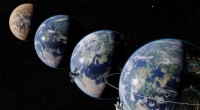
* Earth: Earth has a relatively thin atmosphere, composed primarily of nitrogen and oxygen. It's thick enough to provide weather patterns, protect us from harmful radiation, and allow for life.
* Mars: Mars has a thin atmosphere, mostly composed of carbon dioxide. It's much thinner than Earth's and doesn't offer much protection.
So, the answer is no. While Mercury and Mars have very thin atmospheres, Venus has a very thick one, and Earth falls somewhere in between.