* Hydrogen (H): The most abundant element in the universe, making up roughly 70% of a nebula's mass.
* Helium (He): The second most abundant element, accounting for about 28% of the nebula's mass.
* Trace amounts of heavier elements: These include elements like oxygen, carbon, nitrogen, and iron, which are formed in the cores of stars during their life cycles.
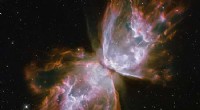
These elements are present in the nebula in the form of atoms and molecules. The nebula itself is extremely cold and diffuse, but gravity slowly pulls these particles together. As more particles accumulate, the density of the nebula increases and its temperature rises.
This process is called gravitational collapse, and it eventually leads to the formation of a protostar, a dense and hot core that is the precursor to a star. The protostar continues to grow as it accretes more gas and dust from the surrounding nebula.
Key Points:
* The starting materials for a star are primarily hydrogen and helium, along with trace amounts of heavier elements.
* These materials are found in giant clouds of gas and dust called nebulae.
* Gravity pulls these materials together, causing the nebula to collapse and heat up, forming a protostar.
Therefore, the starting materials for a star are the elements found within a nebula, primarily hydrogen and helium.