Here's why:
* Moons are formed through various processes: Some moons form from the same disk of gas and dust that formed the planet, while others are captured by the planet's gravity from elsewhere.
* Planetary size and gravity: The size and gravitational pull of a planet affect its ability to capture and hold onto moons. Smaller planets with weaker gravity are less likely to have moons.
* Orbital dynamics: The gravitational interactions between planets and moons can be complex. In some cases, moons can be ejected from their planetary systems.
Here's a breakdown:
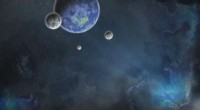
* Planets with moons: Earth, Mars, Jupiter, Saturn, Uranus, Neptune
* Planets without moons: Mercury, Venus
So, while some planets have multiple moons, others have none at all.