The life cycle of a star is determined by its initial mass. Here's a breakdown of the major stages:
1. Nebula:
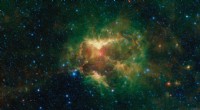
* The beginning: Stars are born from vast clouds of gas and dust called nebulae. These clouds are mostly composed of hydrogen and helium.
* Gravity's role: Gravity pulls the material in the nebula together, causing it to collapse.
* Heating up: As the cloud collapses, it heats up, forming a protostar.
2. Protostar:
* Early development: The protostar continues to grow in size and temperature.
* Nuclear fusion: Eventually, the core of the protostar reaches a critical temperature and pressure, igniting nuclear fusion. This is the point where the star is officially born.
3. Main Sequence Star:
* Stability: The star enters its longest and most stable stage, known as the main sequence.
* Fusion of hydrogen: During this stage, the star fuses hydrogen into helium in its core, releasing energy and emitting light.
* Duration: The duration of the main sequence phase depends on the star's mass. Massive stars have shorter lifespans than less massive stars.
4. Red Giant or Supergiant:
* Running out of fuel: Once the hydrogen fuel in the core is depleted, the star starts fusing helium into heavier elements in a shell around the core.
* Expansion: The core contracts, but the outer layers expand, leading to a significant increase in the star's size. The star becomes a red giant (for smaller stars) or a supergiant (for larger stars).
5. Post-Red Giant Stages:
* Further fusion: The star continues to fuse heavier elements, progressing through stages like carbon burning and oxygen burning.
* Instability: The star becomes unstable and may pulsate, ejecting material into space.
6. Final Stages:
* White Dwarf: For stars with less than eight solar masses, the core collapses into a dense, hot object called a white dwarf. The outer layers are shed as a planetary nebula.
* Neutron Star: For stars with 8-20 solar masses, the core collapses even further, forming a neutron star. This is a very dense object with incredibly strong gravity.
* Black Hole: For stars with more than 20 solar masses, the core collapses completely, forming a black hole. These are objects with such intense gravity that nothing, not even light, can escape their pull.
Other possible scenarios:
* Supernova: Massive stars may end their lives in a spectacular explosion called a supernova. This explosion disperses heavy elements created during the star's life into space, enriching the interstellar medium for the formation of new stars and planets.
* Binary Star Systems: Stars can exist in binary systems, where two stars orbit each other. Their interactions can influence their evolution and lead to various phenomena like novae and white dwarf mergers.
Note: The evolution of stars is a complex process influenced by various factors like mass, rotation, and composition. The stages described above are simplified representations and can vary depending on the specific characteristics of the star.