Understanding the Universe's Age and Expansion:
* Precise Measurement of the Hubble Constant: Hubble played a crucial role in determining the rate at which the universe is expanding, providing a more accurate value for the Hubble Constant. This helped to refine our understanding of the age of the universe, placing it at approximately 13.8 billion years.
* Evidence for Dark Energy: Observations of distant supernovae using Hubble showed that the expansion of the universe is actually accelerating. This discovery led to the concept of dark energy, a mysterious force thought to be responsible for this acceleration.
Exploring the Lives of Stars:
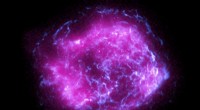
* Detailed Observations of Stellar Evolution: Hubble provided unprecedented views of stars at various stages of their life cycle, from the birth of stars in nebulae to their explosive deaths as supernovae. These observations allowed astronomers to study the processes of star formation, evolution, and death in greater detail.
* Discovery of Protoplanetary Disks: Hubble captured images of dusty disks around young stars, revealing the early stages of planet formation. These observations provided insights into the process of how planets form in the universe.
Exploring Distant Galaxies:
* Deep Field Images: Hubble's Deep Field images revealed a wealth of distant galaxies, some of which were among the oldest and most distant objects ever observed. These images provided a glimpse into the early universe and its evolution.
* Understanding Galaxy Evolution: By observing galaxies at various distances, Hubble provided insights into the evolution of galaxies over billions of years. These observations revealed how galaxies grow and change over time, from small, chaotic objects to large, organized structures.
Other Notable Discoveries:
* First Atmospheric Observations of Exoplanets: Hubble was able to study the atmospheres of exoplanets, planets orbiting stars outside our solar system. This allowed astronomers to learn more about the composition and properties of these distant worlds.
* Mapping Dark Matter: Hubble observations of galaxy clusters helped to map the distribution of dark matter, an invisible form of matter that accounts for a large portion of the universe's mass.
* Images of the Cosmic Microwave Background: Hubble contributed to the study of the Cosmic Microwave Background radiation, a faint afterglow of the Big Bang. These observations helped to provide further evidence for the Big Bang theory.
These are just a few examples of the many groundbreaking discoveries made by the Hubble Space Telescope. The telescope has significantly advanced our understanding of the universe and continues to provide valuable insights into the cosmos.