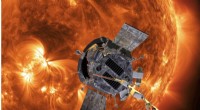
1. Orbits:
* Planetary Orbits: Gravity is the reason planets orbit the sun in elliptical paths. The sun's massive gravitational pull keeps the planets bound to it, preventing them from flying off into space. The strength of the gravitational pull determines the orbital speed and period of each planet.
* Orbital Stability: The gravitational interactions between the planets themselves, while much weaker than the Sun's pull, also influence their orbits. This interaction ensures that the planets don't collide with each other.
2. Tidal Forces:
* Tidal Bulges: The gravitational pull of a planet on its moons (or even the Sun on a planet) creates tidal bulges. These bulges are slightly raised areas of water or even the planet's crust itself, caused by the uneven gravitational pull across the object.
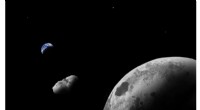
* Tidal Locking: In some cases, the gravitational interaction between a planet and its moon can lead to "tidal locking," where one side of the moon always faces the planet. This is the case with our Moon and Earth.
3. Planetary Evolution:
* Formation of Planets: Gravity was crucial in the formation of planets. Dust and gas in the early solar system clumped together under their mutual gravitational attraction, eventually forming larger and larger bodies.
* Internal Structure: Gravity compresses the material inside planets, creating internal pressure and heat. This heat drives geological processes like volcanism and plate tectonics.
4. Solar System Dynamics:
* Resonances: The gravitational pull of planets can sometimes cause orbital resonances, where the orbital periods of two planets are related in a simple ratio. These resonances can have a significant impact on the stability and evolution of the solar system.
* Perturbations: The gravitational interactions between planets can cause small, but cumulative changes in their orbits over time. These "perturbations" can lead to long-term changes in the solar system's configuration.
Examples:
* Jupiter's Influence: Jupiter, being the largest planet, exerts a powerful gravitational influence on the rest of the solar system. It has shaped the asteroid belt and is responsible for the peculiar orbits of some comets.
* Earth's Moon: The Moon's gravity is responsible for tides on Earth, and its influence on our planet's rotation has slowed down Earth's rotation over time.
Conclusion:
Gravity is the invisible force that orchestrates the dance of the planets in the solar system. It determines their orbits, shapes their evolution, and influences their interactions. Understanding gravity is essential to comprehending the intricate workings of our solar system.