1. Transmission:
* Atmospheric Effects: The laser beam passes through the atmosphere, which can scatter and absorb some of the light. This is dependent on factors like weather conditions, atmospheric density, and the wavelength of the laser.
* Beam Divergence: The laser beam spreads out as it travels, due to diffraction. This spreading reduces the intensity of the beam at the satellite.
2. Reflection:
* Retroreflector: Satellites used for laser ranging typically have retroreflectors mounted on them. These are specialized mirrors that reflect the laser beam back in the exact direction it came from.
* Non-Retroreflective Surfaces: If the satellite lacks retroreflectors, the laser light will be reflected in various directions, making it difficult to detect the reflected signal back at the ground station.
3. Detection:
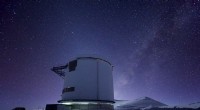
* Reception: The reflected laser light is received by a telescope at the ground station.
* Detection: A sensitive detector measures the time it takes for the light to travel to the satellite and back. This time difference is used to calculate the distance to the satellite with high precision.
Here's a breakdown of the different scenarios:
* Satellite with Retroreflector: The laser light is reflected back efficiently towards the ground station, allowing for accurate distance measurements. This is the standard method for laser ranging.
* Satellite without Retroreflector: The laser light is scattered diffusely, making it difficult to detect the reflected signal. This makes accurate ranging challenging.
* Satellite with Partially Reflective Surfaces: The laser light will be reflected both diffusely and back towards the ground station. This can be useful for rough distance estimates, but not as precise as using a retroreflector.
The success of laser ranging depends heavily on the following factors:
* Laser Power: A powerful laser is required to overcome atmospheric attenuation and reach the satellite.
* Telescope Size: A large telescope improves the signal-to-noise ratio by collecting more reflected light.
* Detector Sensitivity: A sensitive detector is needed to measure the faint reflected signal.
* Atmospheric Conditions: Clear weather conditions with minimal atmospheric turbulence are ideal for laser ranging.
Overall, laser ranging systems utilize the principles of light travel time and retroreflection to measure distances to satellites with high accuracy. This information is crucial for various applications, including:
* Satellite Orbit Determination:
* Earth Geodesy: Measuring the shape and size of the Earth.
* Plate Tectonics Monitoring: Observing the movement of Earth's tectonic plates.
* Spacecraft Navigation: Guiding spacecraft in space.