Composition:
* Gas giants: Both are primarily composed of hydrogen and helium, making them gas giants.
* Rocky core: Both are thought to have a small, solid rocky core at their center.
* No solid surface: Neither planet has a defined solid surface like Earth.
Atmosphere:
* Colorful bands and storms: Both display prominent, colorful bands and storms in their atmospheres.
* Great Red Spot/Great White Spot: Jupiter's Great Red Spot and Saturn's Great White Spot are both gigantic, long-lasting storms.
* Strong winds: Both experience extremely strong winds in their atmospheres.
Moons:
* Numerous moons: Both Jupiter and Saturn have a vast number of moons, with Jupiter having 79 and Saturn having 82 confirmed moons.
* Diversity of moons: Their moons display a remarkable diversity in size, shape, and composition.
* Potential for life: Some of their moons, like Europa (Jupiter) and Enceladus (Saturn), are thought to potentially harbor conditions suitable for life.
Rings:
* Ring systems: Both planets possess prominent ring systems composed of ice and dust particles.
* Origin of rings: The origin of their rings is believed to be related to the breakup of past moons.
Internal Structure:
* Liquid metallic hydrogen: Both planets are thought to have a layer of liquid metallic hydrogen in their interiors, which contributes to their strong magnetic fields.
* High internal pressure: The immense pressure inside both planets is thought to create extreme conditions unlike anything found on Earth.
Rotation:
* Fast rotation: Both planets rotate very quickly, leading to their flattened shapes.
Magnetic fields:
* Strong magnetic fields: Both have strong magnetic fields that extend far into space, trapping charged particles and creating auroras.
Temperature:
* Cold temperatures: The surface temperatures of both planets are extremely cold due to their great distance from the Sun.
However, despite their similarities, there are also some significant differences between Jupiter and Saturn:
* Size: Jupiter is much larger than Saturn, both in diameter and mass.
* Density: Jupiter is denser than Saturn, despite its larger size.
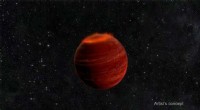
* Color: Jupiter's atmosphere has a reddish hue, while Saturn's atmosphere has a pale yellow color.
* Ring system: Saturn's ring system is much more prominent and elaborate than Jupiter's.
* Moons: Jupiter's largest moon, Ganymede, is larger than the planet Mercury.
Overall, Jupiter and Saturn share many characteristics that make them fascinating objects in our solar system. Their similarities suggest that they formed under similar conditions, while their differences highlight the unique evolution of each planet.