Scale and Composition:
* Milky Way: A vast, spiral-shaped galaxy containing billions of stars, planets, gas, dust, and dark matter. It spans about 100,000 light-years across.
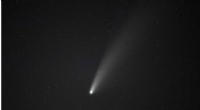
* Solar System: A relatively small system comprising a single star (the Sun) and the celestial objects that orbit it, including planets, moons, asteroids, and comets. It extends roughly 10 billion kilometers from the Sun.
Structure:
* Milky Way: Has a central bulge, spiral arms, and a halo of stars and dark matter.
* Solar System: Primarily consists of planets orbiting the Sun in a disk-like plane.
Components:
* Milky Way: Contains numerous star clusters, nebulae, and black holes.
* Solar System: Primarily composed of planets, dwarf planets, and smaller celestial bodies.
Location:
* Milky Way: Our solar system is located in one of the Milky Way's spiral arms, about 26,000 light-years from the galactic center.
* Solar System: Its location is within the Milky Way galaxy, but it's a small part of it.
Formation:
* Milky Way: Formed billions of years ago from a giant cloud of gas and dust.
* Solar System: Formed around 4.6 billion years ago from a collapsing cloud of gas and dust.
Key Points:
* The Milky Way galaxy is the larger entity that contains our solar system.
* Our solar system is just one small part of the Milky Way, containing our Sun and its orbiting planets.
* The Milky Way is incredibly vast and complex, containing billions of stars and other celestial objects.
* Our solar system is much smaller and simpler, containing only our Sun and its orbiting planets.
In essence, the Milky Way is like a gigantic city, with the solar system being a single house within that city.