What Happens:
* Hydrogen Fusion: Stars, like our Sun, spend the majority of their lives fusing hydrogen into helium in their cores. This process releases energy, making the star shine.
* Core Depletion: Eventually, the hydrogen in the core runs out. The core then contracts under its own gravity, becoming hotter and denser.
* Shell Fusion: This contraction causes the outer layers of the star to expand greatly, becoming a giant. Hydrogen fusion now occurs in a shell surrounding the core.
Characteristics of Giant Stars:
* Large Size: Giant stars are much larger than main sequence stars (like our Sun) of similar mass.
* Lower Density: Despite their size, giant stars are less dense than main sequence stars.
* Cooler Temperature: Giant stars have cooler surface temperatures than their main sequence counterparts, giving them a reddish or orange hue.
* Luminosity: Giant stars are much more luminous than main sequence stars because their larger surface areas radiate more energy.
* Evolutionary Stage: Giant stars represent an intermediate stage in the evolution of stars more massive than our Sun.
Types of Giant Stars:
* Red Giants: The most common type of giant star. They are cool and reddish, often with diameters hundreds of times larger than our Sun.
* Blue Giants: Less common and much hotter than red giants, these stars are often the result of very massive stars that have quickly burned through their hydrogen fuel.
Examples:
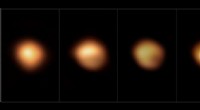
* Betelgeuse: A red giant star in the constellation Orion.
* Arcturus: A red giant star in the constellation Boötes.
Further Evolution:
* Giant stars will eventually evolve into white dwarfs, neutron stars, or black holes, depending on their initial mass.
* Their evolution is marked by pulsations, mass loss, and potential instability.
Let me know if you want to know more about any specific type of giant star or their evolution!