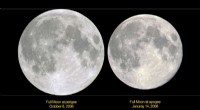
1. The Moon's Orbit: The Moon orbits the Earth in an elliptical path, meaning it's not always the same distance away. However, this distance variation is less significant than the changing angle of sunlight.
2. The Sun's Light: The Sun is the source of light that illuminates the Moon. As the Moon orbits Earth, the angle at which sunlight strikes the Moon's surface changes.
3. The Phases: We see different shapes of the illuminated portion of the Moon, known as the phases:
* New Moon: The Moon is between the Earth and the Sun, so the side facing us is completely dark.
* Waxing Crescent: A sliver of the Moon becomes visible, growing larger each night.
* First Quarter: Half of the Moon is illuminated, appearing as a semicircle.
* Waxing Gibbous: The illuminated portion continues to grow, becoming more than half.
* Full Moon: The entire side of the Moon facing Earth is illuminated, making it appear round.
* Waning Gibbous: The illuminated portion starts to shrink, going back to more than half.
* Last Quarter: Again, half the Moon is illuminated, but now it's the opposite half compared to the First Quarter.
* Waning Crescent: The sliver of the Moon continues to shrink before disappearing completely back to a New Moon.
Think of it like this: The Moon is like a giant ball being illuminated by a single light source (the Sun). As the Moon orbits Earth, the light hits different parts of the ball, creating the different shapes we see.
In short, the Moon's phases are a result of the changing angle of sunlight as the Moon orbits Earth.