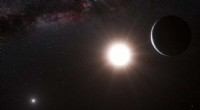
* Surface area and brightness: As the star expands, its surface area increases. This means the same amount of energy is spread out over a larger area, leading to a decrease in brightness.
* Temperature: The expansion also causes the star's surface temperature to decrease. Cooler stars emit less light overall, further contributing to the dimming effect.
Important Note: The changes in brightness are not abrupt. The star's brightness will fluctuate over time as it cycles through its pulsation period. These fluctuations are what characterize pulsating stars.
Types of Pulsating Stars:
There are several types of pulsating stars, each with its own unique mechanism and characteristic brightness variations:
* Cepheid variables: These stars pulsate with periods ranging from a few days to several weeks. Their brightness changes are directly related to their pulsation period.
* RR Lyrae variables: Similar to Cepheid variables, but with shorter pulsation periods (typically less than a day).
* Mira variables: These are long-period variables with pulsation periods ranging from months to years. They exhibit large changes in brightness, often varying by several magnitudes.
By studying the pulsation periods and brightness variations of pulsating stars, astronomers can learn about their properties, including their distance, age, and composition.