Here's a breakdown:
* Rotation: This is the spinning of a planet around its own axis.
* Period: This refers to the amount of time it takes to complete one full cycle of rotation.
How it Affects a Planet:
* Day and Night: The rotation of a planet is what creates day and night. The side facing the sun experiences daylight, while the opposite side experiences night.
* Length of Day: The period of rotation determines the length of a day on a planet. For example, Earth's rotation period is about 24 hours, which is why we have 24-hour days.
* Weather Patterns: Rotation can influence weather patterns. For example, the Coriolis effect, which is caused by Earth's rotation, deflects winds and ocean currents.
Examples:
* Earth: 23 hours, 56 minutes, and 4 seconds
* Mars: 24 hours, 37 minutes, and 22 seconds
* Venus: 243 Earth days (rotates very slowly in the opposite direction of its orbit)
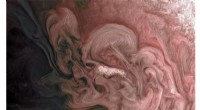
* Jupiter: 9 hours, 55 minutes, and 30 seconds (rotates very quickly)
It's important to note that a planet's rotational period can vary slightly due to factors such as its mass, density, and internal structure.