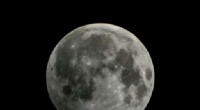
1. Both are spherical: Due to their own gravity, both planets and stars take on a nearly spherical shape.
2. Both are composed of matter: Both are made up of atoms, though the types of atoms and their proportions are different. Planets are primarily composed of rock, ice, or gas, while stars are mostly hydrogen and helium.
3. Both have a gravitational pull: Both planets and stars exert gravitational force, influencing the movement of objects around them.
4. Both emit radiation: Planets reflect light from their host star, while stars produce their own light and heat through nuclear fusion.
5. Both are part of larger systems: Planets orbit stars in solar systems, while stars themselves can be part of star clusters or galaxies.
6. Both can have atmospheres: While atmospheres vary greatly in composition and density, planets and some stars (like red giants) have atmospheres surrounding them.
Here are some key differences between planets and stars:
* Energy source: Stars produce their own light and heat through nuclear fusion, while planets rely on reflected light from their host star.
* Composition: Stars are mainly composed of hydrogen and helium, while planets are made of a variety of elements, including rock, ice, and gas.
* Temperature: Stars are extremely hot due to nuclear fusion, while planets are significantly cooler.
* Size and mass: Stars are much larger and more massive than planets.
* Lifespan: Stars have a finite lifespan, measured in billions of years, while planets can last for much longer periods.
In conclusion, planets and stars are both celestial objects, but they differ greatly in their composition, energy source, size, and lifespan. However, they share some fundamental similarities, such as their spherical shape, gravitational pull, and radiation emission.