The formation of galaxies is a complex and ongoing process, still being actively studied by astronomers. While we don't have a single definitive explanation, a prevailing theory suggests a multi-stage process, starting from the early universe:
1. The Cosmic Web:
* After the Big Bang, the universe was a hot, dense soup of particles.
* Over time, tiny density fluctuations in this soup grew due to gravity, pulling in more matter.
* This resulted in the formation of vast, filamentous structures called the cosmic web, where galaxies are born and evolve.
2. The Seeds of Galaxies: Dark Matter and Gas Clouds:
* Dark matter, a mysterious substance that interacts only gravitationally, plays a crucial role.
* Its gravitational pull attracts normal matter, forming vast, dense clouds of gas.
* These clouds are the building blocks of galaxies, containing the raw material for stars and planets.
3. Galaxy Formation and Evolution:
* Within the gas clouds, gravitational instabilities trigger the collapse and fragmentation of material.
* This collapse leads to the formation of stars, which cluster together to form the first galaxies.
* These early galaxies were often smaller and less structured than the galaxies we see today.
* Over billions of years, galaxies interact with each other, merging and growing.
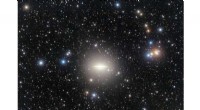
* This constant merging and interaction leads to the diverse range of galaxy morphologies we observe today, from spiral galaxies to elliptical galaxies.
4. The Role of Supernovae:
* Massive stars in galaxies eventually explode as supernovae, releasing vast amounts of energy and heavy elements.
* These supernovae play a significant role in shaping galaxies by:
* Supplying energy that drives galactic winds.
* Providing the raw materials for future star formation.
* Influencing the structure and evolution of the interstellar medium.
5. Ongoing Research and Mysteries:
* While this model provides a framework for understanding galaxy formation, there are still many mysteries:
* The exact nature of dark matter remains elusive.
* The mechanisms that drive galaxy evolution are still being investigated.
* The formation of the earliest galaxies is a particularly active field of research.
In conclusion, the formation of galaxies is a dynamic and multifaceted process that continues to fascinate and challenge astronomers. The ongoing research aims to unravel the mysteries of galaxy formation and shed light on the evolution of our universe.