Here's a breakdown:
What causes it?
* Interplanetary dust: The zodiacal light is not starlight, but sunlight reflecting off tiny dust particles that are scattered throughout the solar system. These dust particles come from various sources, including:
* Comets
* Asteroids
* Collisions between celestial bodies
* Sunlight: The dust particles scatter the sun's light, causing it to appear as a faint glow.
Where to see it?
* Zodiacal band: The dust particles are concentrated in the plane of the solar system, which is also where the constellations of the Zodiac lie. This is why the glow is called "zodiacal" light.
* Best viewing times: The best time to see the zodiacal light is during the spring and autumn, when the ecliptic (the plane of the solar system) is at a steep angle to the horizon.
* Location: You need a dark sky location, free from light pollution, to see the zodiacal light.
Appearance:
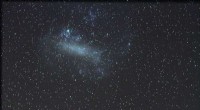
* Faint glow: It's a very faint glow, similar to the Milky Way but much broader and less intense.
* Pyramid shape: The light appears as a faint pyramid extending upwards from the horizon.
* Color: The zodiacal light is typically white, but it can sometimes appear slightly yellowish.
Other related phenomena:
* Gegenschein: A similar phenomenon, the "counterglow" or Gegenschein, can be seen in the opposite direction of the sun. This is caused by sunlight reflecting off dust particles in the opposite direction of the observer.
* Zodiacal band: The zodiacal light is actually part of a broader phenomenon called the zodiacal band, which can be seen on moonless nights.
Zodiacal light is a beautiful and fascinating celestial phenomenon. If you have a dark sky location, try looking for it during the spring or autumn evenings.