* Detection Bias: Most exoplanets are discovered using the transit method, which detects the slight dimming of a star's light as a planet passes in front of it. This method is more effective for planets that orbit close to their stars, as they transit more frequently and cause a more noticeable dip in brightness.
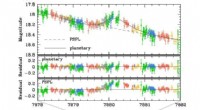
* Radial Velocity (Doppler) Method: This method, which observes the "wobble" in a star's motion caused by the gravitational pull of an orbiting planet, is also more sensitive to planets orbiting close to their stars. This is because the gravitational influence of a planet is stronger the closer it is to the star.
* Early Exoplanet Detections: Early exoplanet discoveries were often "hot Jupiters" - large, gas giant planets orbiting very close to their stars. These planets are easier to detect using the methods mentioned above due to their size and close orbits.
* Statistical Selection: While the number of "hot Jupiters" found initially may have been inflated due to observational biases, the sheer number of these planets found early on created a statistical bias. This led researchers to believe that such systems were common, even though they may not be representative of the overall population of exoplanets.
It's important to note:
* Our detection methods are constantly improving, allowing us to discover exoplanets farther from their stars.
* Recent findings suggest that the population of exoplanets is much more diverse than initially thought, with a variety of sizes, compositions, and orbital distances.
* It's likely that many planets exist in the habitable zones of their stars, but they are harder to detect with current methods.
Therefore, while the majority of discovered extrasolar planets are currently close to their stars, this is largely due to observational biases. We are gradually gaining a more complete understanding of the diversity of exoplanets, and it's clear that many planets exist beyond our current detection capabilities.