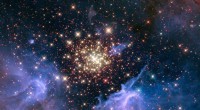
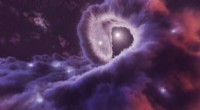
1. When a cloud of gas and dust collapses under its own gravity: This is the starting point of star formation. At this stage, the cloud is called a protostar. It's not yet a star, but it's on its way.
2. When nuclear fusion begins: This is the defining moment of a true star. Nuclear fusion, the process of fusing lighter elements into heavier elements, releases tremendous amounts of energy. This is the energy that makes stars shine.
3. When the core temperature and pressure are high enough to sustain fusion: This is a slightly more nuanced view. While fusion might begin in a protostar, it may not be sustained. Only when the core reaches a certain temperature and pressure will fusion become a continuous process, and the object can be considered a true star.
4. When the star is visible on the Hertzsprung-Russell diagram: This is a diagram that plots the luminosity and surface temperature of stars. Stars on this diagram are considered true stars, even though they may not yet be visible to the naked eye.
In summary:
* There's no single, definitive moment when a star becomes a star. It's a gradual process of evolution.
* The most common definition is when nuclear fusion begins.
* Other definitions take into account the stability of the star and its position on the Hertzsprung-Russell diagram.
It's important to remember that even though we call them "stars," these celestial bodies are constantly changing and evolving over millions or even billions of years.