Fundamental Properties:
* Composition: All stars are primarily composed of hydrogen and helium, with smaller amounts of heavier elements. The Sun is approximately 71% hydrogen, 27% helium, and 2% other elements.
* Nuclear Fusion: Stars generate energy through nuclear fusion reactions in their core, where hydrogen atoms fuse to form helium, releasing tremendous amounts of energy.
* Gravity: The Sun's powerful gravity holds its own mass together and also attracts planets and other objects in its orbit.
* Electromagnetic Radiation: Stars emit a wide range of electromagnetic radiation, including visible light, infrared radiation, ultraviolet radiation, and X-rays. The Sun's radiation provides energy for life on Earth.
Life Cycle:
* Formation: Stars form from collapsing clouds of gas and dust. The Sun likely formed from a giant molecular cloud about 4.6 billion years ago.
* Evolutionary Stages: Stars go through various evolutionary stages, depending on their mass. The Sun is currently in its main sequence stage, where it is fusing hydrogen into helium. It will eventually become a red giant and then a white dwarf.
Other Similarities:
* Temperature: Stars have varying temperatures, depending on their mass and stage of life. The Sun's surface temperature is about 5,500° Celsius.
* Luminosity: The Sun's luminosity is the amount of energy it emits per second. It is a medium-sized star with a relatively average luminosity.
* Spectral Class: Stars are categorized based on their surface temperature and spectral characteristics. The Sun is a G-type star, classified as a yellow dwarf.
Differences:
While the Sun shares many characteristics with other stars, it also has some unique features. For instance, it is considered a relatively young star compared to many other stars in the universe. Its size and mass are also within a typical range for main sequence stars, but not exceptionally large or small.
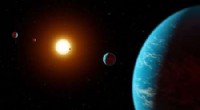
Overall, the Sun is a very ordinary star in the vastness of the universe. While it appears unique from our perspective, its fundamental characteristics and life cycle are remarkably similar to countless other stars throughout the cosmos.