* Movement: Planets appeared to wander across the sky, changing their position relative to the stars over time. This is where the word "planet" comes from, as it's derived from the Greek word for "wanderer." Stars, on the other hand, maintained their fixed positions relative to each other, forming constellations.
* Brightness: Planets were generally brighter than stars and their brightness could vary over time.
* Twinkling: Stars twinkle, which is caused by the Earth's atmosphere distorting the light. Planets, being closer to us and larger, don't twinkle as much.
These observations, coupled with careful tracking and recording of celestial movements, led ancient astronomers to understand that planets were distinct celestial objects different from stars.
Here are some examples of how ancient astronomers used these observations:
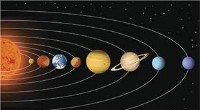
* The Babylonians: They developed sophisticated methods for tracking the movement of planets, creating detailed records of their positions over time. They also identified five planets visible to the naked eye: Mercury, Venus, Mars, Jupiter, and Saturn.
* The Greeks: Greek astronomers like Ptolemy proposed geocentric models of the universe where the Earth was the center and planets revolved around it. They developed mathematical models to predict the movement of planets, although these were later proven incorrect by modern astronomy.
It's important to note that ancient astronomers had limited technology, relying primarily on observations with the naked eye. They couldn't fully understand the nature of planets, but their observations laid the foundation for the development of modern astronomy and our understanding of the solar system.