* Galaxies are vast and diverse: Andromeda is a giant spiral galaxy with billions of stars, gas clouds, dust, and dark matter. These components have vastly different temperatures.
* Temperature varies widely: The temperature of the stars within Andromeda varies greatly depending on their size, age, and stage of life. Gas clouds can be very hot (like the interstellar medium) or very cold (like molecular clouds).
* No single temperature: There isn't a single, uniform temperature across an entire galaxy like Andromeda.
Instead of a specific temperature, we talk about the temperature of individual components of galaxies, like:
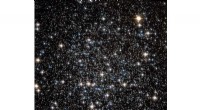
* Stars: Stars have core temperatures that can reach millions of degrees Celsius, while their surface temperatures can range from a few thousand degrees (red dwarfs) to tens of thousands of degrees (blue giants).
* Gas clouds: Hot gas clouds in Andromeda's interstellar medium can reach millions of degrees, while cold molecular clouds can be close to absolute zero (-273.15 °C).
* Black holes: The accretion disks around supermassive black holes at the center of galaxies can reach millions of degrees.
In short: Andromeda galaxy doesn't have a single, measurable temperature. Instead, its individual components exhibit a wide range of temperatures.