The Good:
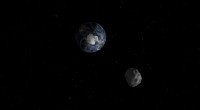
* Stunning Night Skies: Imagine the beauty of two moons illuminating the night sky. We'd have double the lunar cycles, potentially leading to a greater diversity of tidal patterns.
* Enhanced Tidal Forces: The gravitational pull of two moons would increase tides, which could benefit coastal ecosystems and potentially even lead to more powerful wave energy generation.
* New Scientific Opportunities: Studying the interaction between two moons and their effects on Earth would provide valuable data for planetary science and our understanding of gravitational forces.
The Bad:
* Increased Earthquakes and Volcanic Activity: The enhanced gravitational pull from two moons could potentially increase tectonic plate movement, leading to more frequent and intense earthquakes and volcanic eruptions.
* Unstable Orbits: The presence of two moons could create complex gravitational interactions that would destabilize their orbits over time. This could result in one moon crashing into Earth or being ejected from the system.
* Unpredictable Weather Patterns: The interplay of two moons and the Sun's gravitational pull could significantly alter Earth's weather patterns, making them more unpredictable and extreme.
The Uncertain:
* Biological Evolution: It's impossible to know for sure how life on Earth would have evolved with two moons. The different tidal patterns and potentially more unstable climate could have influenced the development of species.
* Cultural Impact: The presence of two moons could have profound cultural and spiritual implications for humanity. It would undoubtedly shape our perceptions of the cosmos and our place within it.
The Bottom Line:
While the idea of two moons is captivating, it's important to understand that the consequences are far from simple. The effects would be complex and multifaceted, with potentially both positive and negative impacts on Earth and its inhabitants.