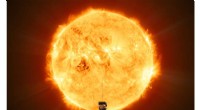
* Nuclear Fusion Stops: Stars like our Sun generate energy through nuclear fusion in their core, converting hydrogen into helium. This process creates outward pressure that balances gravity. When a star runs out of hydrogen fuel, fusion stops in the core.
* Collapse and Rebound: Without the outward pressure from fusion, the core collapses under its own gravity. This collapse generates intense heat, causing the outer layers of the star to be expelled in a planetary nebula.
* White Dwarf Remains: The core of the star, now extremely dense and composed mainly of carbon and oxygen, becomes a white dwarf. It's incredibly hot, but without fuel, it gradually cools down over billions of years.
Why it's not "dead":
* Still emits light: White dwarfs still radiate heat and light, though much fainter than their star phase.
* Gravitational pull: They still have a strong gravitational pull and can attract matter.
* Potential for activity: While white dwarfs are not actively fusing, they can undergo certain processes like accretion, where they attract matter and create bursts of energy.
In essence, a white dwarf is a star that has reached the end of its active life. It's not dead in the sense that it's no longer emitting anything, but it's no longer a star in the traditional sense. It's a remnant of a star, slowly cooling and fading away.