1. Interstellar Medium: The space between stars is not empty, but filled with a thin gas called the interstellar medium (ISM). This ISM is mostly composed of hydrogen and helium, but also contains dust particles.
2. Gravity and Density Fluctuations: Tiny variations in the density of the ISM can lead to areas where gravity is slightly stronger. This attracts more gas and dust, causing these areas to become denser over time.
3. Accretion and Collapse: As these denser regions continue to attract more material, they become more massive and their gravity increases. Eventually, the force of gravity overcomes the internal pressure of the gas and dust, causing the cloud to collapse.
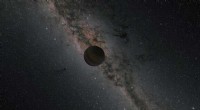
4. Dark Nebula Formation: This collapse leads to a dense, cold, and opaque cloud known as a dark nebula. The dust particles within the cloud absorb and scatter light, blocking the view of stars behind them. These nebulae appear as dark patches against the background of stars and other celestial objects.
5. Star Formation: The collapse of dark nebulae is also the birthplace of stars. As the cloud collapses further, its core becomes hotter and denser. Eventually, the core temperature and pressure reach a point where nuclear fusion begins, igniting a new star.
Important Points:
* Dust is Crucial: The dust particles within dark nebulae are vital for their formation and appearance. These particles scatter and absorb light, creating the characteristic dark patches.
* Not All Dark Nebulae Form Stars: Some dark nebulae may be too small or have insufficient mass to trigger star formation. These nebulae might remain as they are for a long time.
* Evolutionary Stages: Dark nebulae can evolve over time. They may eventually become illuminated by the stars they form, transforming into reflection nebulae or even emission nebulae.
In summary, dark nebulae are formed by the gravitational collapse of dense clouds of gas and dust in the interstellar medium. They play a crucial role in the cycle of star formation and are essential components of the Milky Way galaxy.