Jupiter:
* Moons of Jupiter: Galileo discovered four moons orbiting Jupiter. This was a major blow to the geocentric model, which held that everything in the universe revolved around the Earth. It showed that not everything revolves around our planet, and that other celestial bodies could have their own systems.
* Phases of Jupiter's Moons: Galileo observed the phases of Jupiter's moons, similar to the phases of the moon we see. This further supported the idea that these moons were orbiting Jupiter, not the Earth.
Venus:
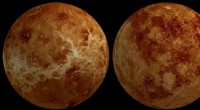
* Phases of Venus: Galileo observed the complete cycle of phases of Venus (from crescent to full and back again), which is impossible to explain if Venus orbits the Earth. In the geocentric model, Venus should only exhibit a limited range of phases (like the moon). The full cycle of phases indicated that Venus orbits the Sun, just like Earth does.
Galileo's Conclusions:
These observations led Galileo to conclude that:
* The Earth is not the center of the universe. He proposed a heliocentric model where the Earth and other planets revolve around the Sun.
* The universe is far more complex and vast than previously thought. He challenged the prevailing Aristotelian worldview, which was heavily influenced by the geocentric model.
Impact:
Galileo's discoveries were revolutionary and sparked a scientific revolution. His observations, combined with his eloquent arguments, played a key role in the shift from the geocentric model to the heliocentric model, which we accept today.