* Rotation Curves: The rotation speed of stars and gas in galaxies doesn't decrease with distance from the galactic center as expected based on the visible matter alone. The observed flat rotation curves suggest there's a lot more mass present than we can see. This "missing mass" is attributed to dark matter.
* Gravitational Lensing: Light bends around massive objects, a phenomenon called gravitational lensing. The bending of light from distant galaxies as it passes through the Milky Way's halo indicates a significant amount of mass in the halo, much more than can be accounted for by the visible matter.
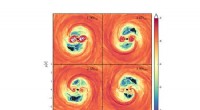
* Simulations: Computer simulations of galaxy formation and evolution require a significant amount of dark matter in the halo to reproduce the observed structures and dynamics of galaxies like our own.
The Milky Way halo is believed to be dominated by dark matter, with a much smaller contribution from visible matter. This dark matter halo is thought to be essential for the stability and formation of the Milky Way galaxy.
So, to correct your statement, astronomers actually think there is a great amount of mass in the Milky Way halo, most of which is dark matter.