Here's a breakdown of the forces at play:
* Nuclear Fusion: The core of a star is a nuclear furnace, where hydrogen atoms fuse into helium, releasing tremendous energy in the process. This outward pressure pushes against the star's own gravity.
* Gravity: The immense mass of a star creates a strong gravitational pull inwards, attempting to crush the star.
During the main sequence:
* Equilibrium: These two forces, fusion pressure and gravity, are in perfect balance. The star maintains a stable size, temperature, and luminosity for a very long time (millions to billions of years).
* Fuel Consumption: As the star burns hydrogen in its core, the amount of fuel gradually decreases. This leads to slight changes in the star's luminosity and size over time.
It's important to note that while the main sequence is a relatively stable period, stars do evolve over time. After the main sequence, they can expand or collapse depending on their mass:
* Lower Mass Stars: After exhausting their hydrogen fuel, these stars will become red giants, expanding significantly.
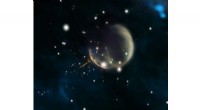
* Higher Mass Stars: These stars will eventually run out of fuel and undergo a catastrophic collapse, leading to supernova explosions.
In short, stars don't expand or collapse during their main sequence stage because they are in a state of equilibrium. The outward pressure from nuclear fusion balances the inward pull of gravity. It's after the main sequence, when the nuclear fuel runs out, that stars undergo significant expansion or collapse.