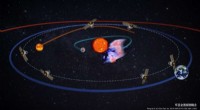
* It's relatively close: While Mars is far away compared to our Moon, it's the closest planet to Earth after Venus (and sometimes Mercury, depending on orbital positions).
* It's reflective: Mars reflects sunlight, just like Earth does. This reflected sunlight is what we see.
* It's bright: Mars is a relatively bright object in the night sky, making it easier to spot. It's often the fourth brightest planet (after Venus, Jupiter, and Saturn).
However, you can't always see Mars:
* Its position in the sky changes: Like all planets, Mars orbits the Sun, and its position relative to Earth changes. Sometimes it's close, other times it's very far away.
* It's not always visible at night: Even when close, Mars' visibility depends on its position in the sky, and whether it's obscured by the Sun or the Moon.
To find Mars in the night sky:
* Use a stargazing app or website to find its current position.
* Look for a bright reddish-orange "star" that doesn't twinkle like a true star.
* It may appear faint or even impossible to spot when far from Earth.
You can learn more about Mars by visiting NASA's website or other astronomy resources!