* Light bends: As starlight travels through the atmosphere, it encounters layers of air with different densities. This causes the light to bend and refract, similar to how light bends when passing through a prism.
* Distortion and movement: The constant shifting and changing of the air creates a distorted and rapidly moving image of the star.
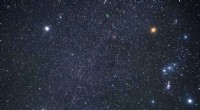
* Color variation: The light from the star is actually white, but the bending and refraction can cause different wavelengths of light to be dispersed at different rates. This can lead to slight variations in the color we perceive, sometimes appearing as a reddish hue.
Therefore, it's not the star itself that is flickering red, but the way its light is affected by Earth's atmosphere. The effect is more noticeable for stars closer to the horizon because the starlight has to travel through more atmosphere.