1. Telescopes:
* Earth-based telescopes: From ancient astronomers to modern observatories like the SOHO (Solar and Heliospheric Observatory) and the Daniel K. Inouye Solar Telescope, telescopes have been used to study the Sun's surface, atmosphere, and activity.
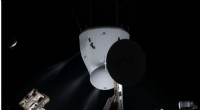
* Space-based telescopes: Telescopes like SOHO, SDO (Solar Dynamics Observatory), and the upcoming Solar Orbiter offer a unique advantage by being above the Earth's atmosphere, allowing for clearer and uninterrupted observations.
2. Spacecraft:
* Flybys: Spacecraft like the Helios probes (1974-76) and the Ulysses mission (1990-2009) flew close to the Sun, gathering valuable data on its magnetic field, solar wind, and coronal mass ejections.
* Orbits: The SOHO and SDO spacecraft orbit the Sun continuously, providing constant monitoring of its activity and providing data for long-term studies.
* Future Missions: The upcoming Solar Orbiter mission will fly closer to the Sun than any previous spacecraft, studying its polar regions and taking high-resolution images.
3. Missions to study the Solar Wind:
* Voyager 1 & 2: These probes, launched in 1977, are currently venturing beyond the Solar System, providing information about the Sun's influence on the interstellar medium.
* Other missions: The Parker Solar Probe (launched in 2018) is designed to fly through the Sun's corona, directly sampling its atmosphere and studying its structure.
Who has explored the Sun?
The exploration of the Sun is a global effort involving contributions from various countries and organizations:
* NASA (USA): Responsible for missions like SOHO, SDO, and the Parker Solar Probe.
* ESA (European Space Agency): Contributes to joint missions with NASA, like SOHO and the upcoming Solar Orbiter.
* JAXA (Japan Aerospace Exploration Agency): Partners with NASA on various missions, including the Solar-B spacecraft.
* Numerous Universities and Research Institutes: These institutions play a crucial role in developing instruments, analyzing data, and interpreting findings from solar missions.
The exploration of the Sun is an ongoing effort, with new missions planned to further our understanding of this vital star and its influence on our planet.