Here are the main methods used to detect exoplanets:
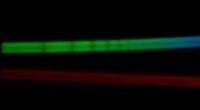
* Radial Velocity Method (Doppler Spectroscopy): This method looks for slight wobbles in a star's motion caused by the gravitational pull of an orbiting planet. These wobbles can be detected by measuring changes in the star's light, as it moves slightly towards and away from Earth.
* Transit Method: This method observes the slight dimming of a star's light as a planet passes in front of it, blocking a tiny portion of the star's light. This method is particularly effective for finding planets that orbit close to their stars.
* Direct Imaging: This method involves taking pictures of planets directly, but this is incredibly challenging due to the overwhelming brightness of the host star. It has been most successful for detecting large planets that orbit far from their stars.
* Microlensing: This method uses the gravitational lensing effect of a star to magnify the light from a more distant star. If a planet is orbiting the lensing star, it can cause a temporary blip in the magnified light.
* Astrometry: This method looks for tiny changes in the position of a star caused by the gravitational pull of an orbiting planet.
Since the first discovery of an exoplanet in 1992, astronomers have found thousands of planets orbiting other stars. These discoveries have revolutionized our understanding of planetary systems and the potential for life beyond Earth.