1. Reflect light from stars:
* Planets: Like Earth, Mars, and Jupiter, these celestial bodies reflect sunlight, making them visible from Earth.
* Moons: Natural satellites of planets, like our Moon, reflect sunlight.
* Asteroids: Rocky bodies orbiting the Sun, often found in the asteroid belt between Mars and Jupiter.
* Comets: Icy bodies that release gas and dust when they approach the Sun, reflecting sunlight.
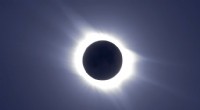
2. Block light from stars:
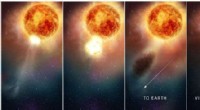
* Dust clouds: Large collections of dust and gas in interstellar space. They can block light from stars behind them, creating dark patches in the sky.
* Exoplanets: Planets orbiting stars outside our solar system. While we can't see them directly, we can detect them by the way they block the light of their host star as they pass in front of it.
3. Emit other forms of radiation:
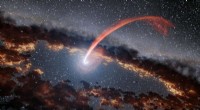
* Black holes: Regions of spacetime where gravity is so strong that nothing, not even light, can escape. We can detect them by the way they interact with surrounding matter, like the accretion disk of gas and dust around them, which emits radiation.
* Neutron stars: The incredibly dense remnants of massive stars that have exploded as supernovae. They can emit radio waves and X-rays.
Examples of non-luminous objects in space:
* The Moon
* Mars
* The asteroid belt
* Halley's Comet
* The interstellar dust cloud in the constellation Orion
* Exoplanets like Proxima Centauri b
* The supermassive black hole at the center of the Milky Way
Note: While these objects don't emit their own light, some of them might emit other types of radiation, making them detectable through various methods.