* Ancient Observations: The five planets visible to the naked eye (Mercury, Venus, Mars, Jupiter, and Saturn) have been known since antiquity. Ancient civilizations like the Babylonians, Egyptians, and Greeks observed these celestial objects moving differently than the stars, recognizing them as wanderers. They developed complex systems for tracking their movements and predicting their positions.
* Not Recognized as Planets: While these objects were observed and studied, they weren't initially understood as planets in the modern scientific sense. They were often considered deities or celestial bodies with special significance.
* The Copernican Revolution: It wasn't until the 16th century that Nicolaus Copernicus proposed a heliocentric model of the solar system, placing the Sun at the center and the Earth orbiting it. This revolutionized our understanding of the universe and led to the modern concept of planets as celestial bodies orbiting a star.
* Telescopes and Further Discoveries: The invention of the telescope in the 17th century enabled much more detailed observation. Galileo Galilei, using his telescope, discovered Jupiter's four largest moons, providing further evidence for the heliocentric model and confirming the existence of bodies orbiting other planets. This marked a significant step in the "discovery" of planets as we know them today.
* Modern Discoveries: Throughout history, further discoveries of planets have been made through various methods, including:
* Observing their gravitational influence on other objects: This led to the discovery of Neptune in 1846.
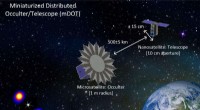
* Direct imaging: While challenging, technology now allows us to directly image some exoplanets outside our solar system.
* Transit method: Detecting the slight dimming of a star as a planet passes in front of it. This has been the most successful method for finding exoplanets.
So, rather than being "discovered" in a single event, our understanding of planets has evolved over millennia, with each new discovery building upon previous knowledge.