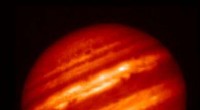
Color: Jupiter is known for its vibrant, swirling bands of color. These are caused by different atmospheric currents and composition. The most prominent feature is the Great Red Spot, a giant storm that has been raging for centuries. There are also lighter bands (zones) and darker bands (belts).
Texture: The atmosphere is constantly churning, with clouds swirling and changing. This gives Jupiter a fluid, dynamic look.
Overall Shape: It's a giant sphere, slightly squashed at the poles due to its rapid rotation.
Detailed Features:
* Great Red Spot: A massive storm that's larger than Earth, with swirling reddish clouds.
* Bands: Light and dark bands encircle the planet, caused by different atmospheric currents.
* White Ovals: Smaller storms, sometimes called "white ovals" can appear and disappear over time.
What You Can See With a Telescope:
Even with a small telescope, you can see Jupiter's bands and the Great Red Spot. With larger telescopes, you can see more detail, including the white ovals and even some of the planet's moons.
Images:
To get a good visual, search for images of Jupiter on the internet. NASA's Juno spacecraft has captured some stunning high-resolution images that show the planet's incredible detail.
It's important to remember:
While we can see Jupiter's surface, it's a gas giant, so it's not solid like Earth. We're actually looking at the top layers of its atmosphere.