Here's why:
* The Big Bang: The universe began with the Big Bang, and the very first stars formed from the primordial hydrogen and helium gas that was present.
* Population III Stars: These stars were massive, hot, and short-lived. They are theorized to have formed shortly after the Big Bang, making them the oldest stars.
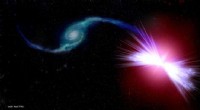
* No Direct Observation: Population III stars no longer exist. They burned through their fuel very quickly and exploded as supernovae, leaving behind the elements that formed later generations of stars.
* Evidence: Astronomers have indirect evidence of Population III stars through the chemical composition of very old stars and the cosmic microwave background radiation.
Other Considerations:
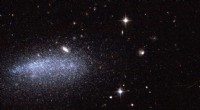
* Population II Stars: These stars formed later than Population III stars and are also considered very old. They are typically found in the halo of galaxies and are less massive than Population III stars.
* Population I Stars: These are the youngest stars and are found in the disk of galaxies.
In summary: While we haven't directly observed them, Population III stars are the oldest stars in terms of their life cycle, forming shortly after the Big Bang and having a short, intense life.