The Doppler Effect
The key principle is the Doppler effect, which you might be familiar with from the sound of a siren changing pitch as it moves towards or away from you. The same concept applies to light.
* Redshift: When a galaxy moves *away* from Earth, the light it emits gets stretched out. This means the wavelengths of light are shifted towards the *red* end of the spectrum (longer wavelengths). This is called redshift.
* Blueshift: Conversely, when a galaxy moves *towards* Earth, the light it emits gets compressed. This shifts the wavelengths towards the *blue* end of the spectrum (shorter wavelengths). This is called blueshift.
Spectral Lines as Markers
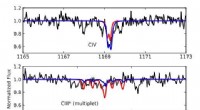
* Unique Signatures: Every element in the universe emits and absorbs light at specific wavelengths. These wavelengths create distinct lines on a spectrum, like a fingerprint.
* Shifting Lines: When a galaxy is moving, these spectral lines are shifted to longer or shorter wavelengths due to the Doppler effect.
* Measuring the Shift: By measuring the shift in the spectral lines (specifically the amount of redshift or blueshift), astronomers can calculate the velocity of the galaxy relative to Earth.
Example:
Imagine a galaxy emitting light that contains a spectral line from hydrogen at a specific wavelength. If we observe that line shifted to a longer wavelength (redshift), it means the galaxy is moving away from us.
The Expanding Universe
The redshift of distant galaxies is a key piece of evidence for the expanding universe. Almost all galaxies show redshift, indicating that the universe is expanding and that galaxies are moving further apart.