1. From Geocentric to Heliocentric:
* Early Theories: Ancient civilizations like the Greeks believed in a geocentric model, with Earth at the center of the universe.
* Nicolaus Copernicus's Heliocentric Model: In the 16th century, Copernicus proposed that the Sun, not Earth, was the center of our solar system. This revolutionary idea challenged established dogma and laid the foundation for modern astronomy.
2. From Static to Dynamic:
* Isaac Newton's Law of Universal Gravitation: Newton's groundbreaking work in the 17th century described the force of gravity, explaining how planets move in elliptical orbits around the Sun. This brought order to celestial motion and ushered in the era of modern physics.
* Albert Einstein's Theories of Relativity: In the early 20th century, Einstein's theories of special and general relativity expanded our understanding of space, time, gravity, and the very fabric of the universe. They revealed that the universe is not static but constantly expanding and that gravity warps spacetime itself.
3. From a Small Universe to a Vast Cosmos:
* Edwin Hubble's Discovery of Expanding Universe: In the 1920s, Hubble's observations of galaxies showed that they are moving away from each other, indicating that the universe is expanding. This discovery changed our view from a small, finite universe to a vast and constantly evolving one.
* The Big Bang Theory: This theory, developed in the 20th century, proposes that the universe originated from a very hot, dense state and has been expanding ever since. It provides a framework for understanding the early universe, the formation of galaxies, and the cosmic microwave background radiation.
4. From Ordinary Matter to Dark Matter and Dark Energy:
* Dark Matter and Dark Energy: Observations of galaxy rotation and cosmic expansion revealed that visible matter accounts for only a small fraction of the universe's mass and energy. The existence of dark matter and dark energy, whose nature is still unknown, challenges our understanding of the universe and poses new questions for future research.
5. From the Universe as a Unique System to the Multiverse Hypothesis:
* Multiverse Hypothesis: Some theoretical models suggest the existence of multiple universes, possibly with different physical laws and constants. This idea, while still speculative, challenges our traditional view of a single universe and raises profound philosophical questions about the nature of reality.
Ongoing Discoveries and Theories:
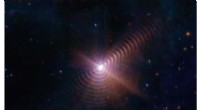
* New Telescopes and Observatories: The continuous development of powerful telescopes and space observatories like the James Webb Space Telescope allows us to observe fainter and more distant objects, providing new data and challenging existing theories.
* String Theory and Quantum Gravity: These theoretical frameworks aim to unify quantum mechanics and general relativity, providing a deeper understanding of the fundamental forces and the origins of the universe.
In conclusion, theories have been instrumental in transforming our understanding of the universe, guiding us from a limited, Earth-centered view to a vast, expanding cosmos filled with mysteries yet to be unraveled. The ongoing pursuit of knowledge and new discoveries continues to reshape our perception of the universe, revealing its complexity and wonder.