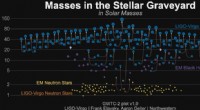
Here's why:
* Gravity and Fusion: A star's life is a balance between gravity pulling matter inward and nuclear fusion pushing outward. The more massive a star is, the stronger its gravity. This means it needs to fuse hydrogen into helium at a much faster rate to maintain stability.
* Fuel Consumption: Massive stars burn through their hydrogen fuel much quicker than smaller stars. They also have a higher core temperature, allowing them to fuse heavier elements like carbon, oxygen, and even iron.
* Lifespan: The faster fuel consumption leads to a much shorter lifespan for massive stars. They might only live for a few million years, while smaller stars can last for billions of years.
* Death: The final stages of a star's life are also heavily influenced by mass. Massive stars end their lives in spectacular supernova explosions, while smaller stars become white dwarfs or even neutron stars.
While other factors like composition and rotation speed can play a role, initial mass is the dominant factor that shapes the entire life cycle of a star.